👤 Solo Gamers Looking for Connection: Ready to Switch to Co-op Mode?
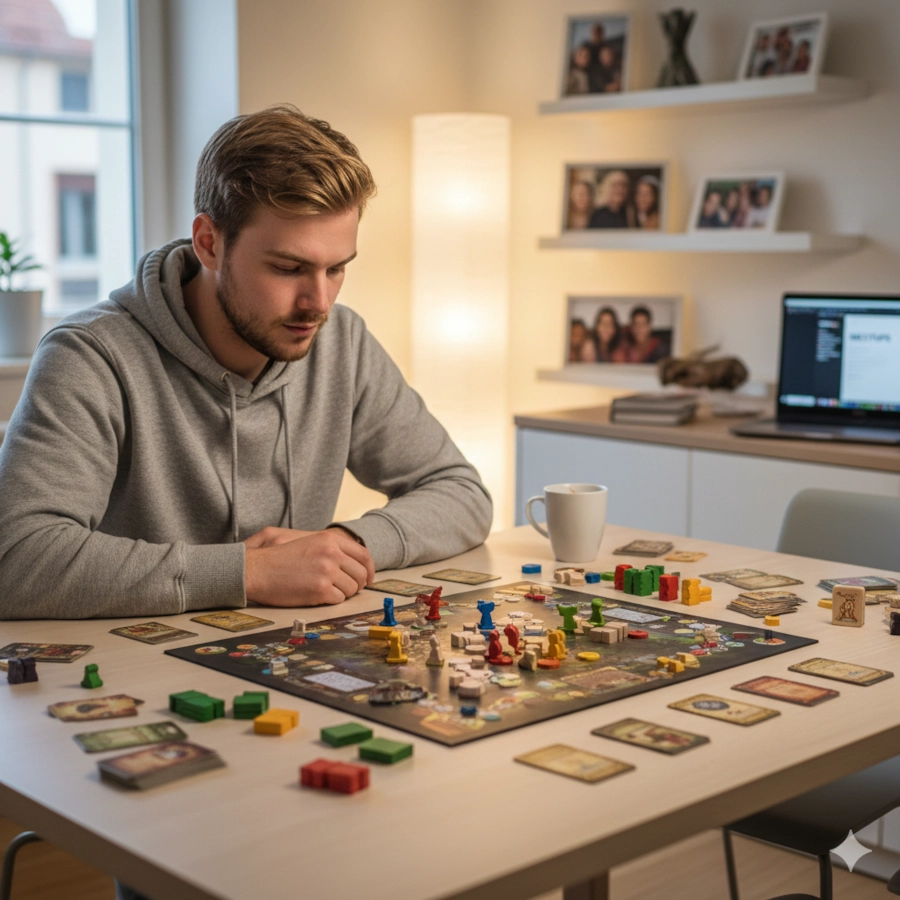
You've perfected your Mage Knight strategy. You've solo'd Spirit Island on the highest difficulty. You can set up and tear down Brass: Birmingham without help. You don't need other people to enjoy board gaming.
But maybe you want them anyway.
Solo gamers aren't antisocial, we're selective. We enjoy the control, the focus, the ability to play on our schedule without coordination. But that doesn't mean we don't want connection. We just want it on our terms, with people who understand why we spent Saturday alone with a campaign game instead of at a crowded game night.
If you're ready to explore the multiplayer expansion of life, here's how to do it without abandoning what makes solo gaming great.
Why Solo Gamers Make Great Partners
We're self-sufficient We don't need constant entertainment or attention. We're comfortable with alone time, independent hobbies, and not being joined at the hip. This makes us low-maintenance partners who don't require constant engagement.
We're deeply focused Solo gaming requires concentration and dedication. We see projects through. We're patient with complexity. We don't give up when things get difficult. These traits translate beautifully to relationships.
We're strategic thinkers We approach problems analytically. We plan ahead. We consider long-term consequences. In relationships, this means we're intentional and thoughtful, not impulsive or reactive.
We respect personal space Because we value our own solo time, we understand when partners need theirs. We don't take alone time personally—it's essential, not rejection.
We're comfortable with silence Not every moment needs filling with conversation. We can sit together, each doing our own thing, and call it quality time. Companionable silence is underrated.
The Challenges Solo Gamers Face
Social skills can atrophy When most of your gaming is alone, social interaction requires more energy. Small talk feels forced. Group dynamics are exhausting. You're out of practice.
Comfort zone is extremely comfortable Why deal with coordinating schedules, teaching games, managing group dynamics, and compromising on game selection when you can just play what you want, when you want, at your own pace?
Vulnerability feels risky Solo gaming is safe. You control everything. Dating means giving someone else influence over your time, emotions, and space. That's terrifying when you're used to complete autonomy.
Fear of losing solo time You've built a life around having generous solo gaming time. What if a relationship demands you give that up? What if they don't understand why you need hours alone with cardboard?
High standards from solo optimization You've optimized your solo experience—perfect setup, ideal schedule, no compromises. Other people introduce inefficiency and chaos. It's hard to accept that partnership isn't about optimization.
Bridge Games: Solo to Multiplayer
Games that excel at both solo and two-player:
Gloomhaven: Jaws of the Lion If you've solo'd campaign games, playing one cooperatively with a partner is a natural transition. Shared challenge, familiar mechanics, built-in conversation topics.
Spirit Island Complex solo game that's brilliant with two. You already know the rules, now you coordinate spirits together. Perfect for strategic solo gamers.
Mage Knight The gold standard solo game also works duo. Play cooperatively first to reduce competitive pressure while learning to share the experience.
Ark Nova Heavy solo euro that's excellent with two. Parallel play style means it feels like enhanced solo rather than forced interaction.
Wingspan Peaceful, low-conflict engine builder. Works solo and with partners. Beautiful production appeals to solo gamers who appreciate quality components.
Terraforming Mars You've probably solo'd this dozens of times. Playing with someone else feels like familiar territory with added conversation.
Why these work: You're not learning completely new games with strangers. You're sharing games you already understand, which reduces anxiety and lets you focus on the social aspect.
Making the Transition
Start with low-pressure social gaming:
Game cafés during quiet hours Visit during weekday afternoons when it's less crowded. Observe others gaming. Get comfortable in the space before attempting to interact.
Solo gaming in public Bring a solo game to a café or game store. Play openly. Sometimes people approach to ask what you're playing. Low-stakes conversation practice.
Organized solo game days Some game stores host "solo gaming meetups" where everyone plays their own game in the same space. Social without forced interaction.
Online before in-person Play Board Game Arena or Tabletop Simulator first. Lower pressure than face-to-face. Easier to manage anxiety when you can step away.
Structured events first Tournaments or organized play sessions have built-in structure. You know what's expected. Less ambiguous than open social gaming.
Finding Solo-Compatible Partners
What to look for:
Other solo gamers People who also prefer solo gaming understand your needs intrinsically. You can have parallel solo sessions—together but each playing your own game. Companionship without forced interaction.
Introverts who game socially They understand needing alone time to recharge but still enjoy shared gaming experiences. They won't take your solo time personally.
People with their own intensive hobbies If they have something they're deeply invested in that requires dedicated time, they'll respect your gaming time without resentment.
Low-demand personalities People who are comfortable with space, silence, and independence. Who don't need constant engagement or validation.
Strategic game preference If they also love heavy, thinky games, you already share core preferences. They'll appreciate the depth you bring to gaming.
Setting Boundaries as a Solo Gamer
Be explicit about your needs:
"I need X hours per week of solo gaming time. This isn't negotiable or personal—it's how I function best."
"I prefer scheduling plans in advance rather than spontaneous meetups. My gaming time is often pre-planned."
"I recharge through alone time, including gaming. If I need space, it's not about you."
"I'm comfortable with parallel activities—we can both game solo in the same room if you want company without interaction."
"I process emotions internally before discussing them. Give me time before expecting conversation about relationship issues."
Good partners will:
- Accept these needs without trying to change you
- Not take alone time as rejection
- Plan around your gaming schedule
- Appreciate the focus you bring to relationships
- Value quality over quantity time
When Solo Gaming Becomes Avoidance
Honest self-assessment:
Are you solo gaming because you genuinely prefer it, or because it's safer than risking rejection?
Are you avoiding social situations out of preference or fear?
Has your solo gaming increased as a response to loneliness or disappointment?
Do you want connection but tell yourself you don't to avoid vulnerability?
Solo gaming is healthy when:
- You genuinely enjoy it and feel fulfilled
- You have other social connections outside gaming
- It's a choice, not a default due to fear
- You're open to shared experiences when they're appealing
- It enhances your life rather than isolating you
It might be avoidance when:
- You're lonely but won't admit it
- You reject social opportunities before trying them
- You feel relieved when plans cancel
- You panic at the thought of sharing your hobby
- Your solo gaming has replaced all social interaction
If it's avoidance, that's okay—but acknowledging it is the first step toward change.
Making Dating Work as a Solo Gamer
Start with understanding people:
On Meeple Dates, look for profiles that show:
- Solo gaming preference listed - They understand the lifestyle
- Introvert-friendly indicators - Comfortable with quiet time
- Heavy game preferences - Share your strategic focus
- Flexible scheduling - Respect for planned gaming time
- Independent hobbies - They have their own intensive interests
First date suggestions for solo gamers:
Play a game you've solo'd together You know the rules, you're comfortable with the mechanisms. The social aspect is the only new element. Reduces anxiety significantly.
Parallel gaming session Meet at a café, each play your own solo game at the same table. Test companionable silence without pressure to constantly interact.
Watch a tournament together Spectating requires minimal interaction. Discuss strategy between rounds. Social without being intensely personal.
Short coffee meeting first 30-minute low-stakes meetup. If it goes well, extend to gaming. If not, easy exit. Managing anxiety through time-boxing.
Maintaining Your Solo Identity in Relationships
You don't have to give up solo gaming:
Healthy relationships accommodate both partners' needs. Your solo gaming time can coexist with quality couple time, they're not competing priorities.
Create a sustainable balance:
- Protected solo gaming blocks (maybe Tuesday/Thursday evenings)
- Regular couple gaming time (Friday night date games)
- Separate social gaming (your game group, their activities)
- Parallel solo sessions (both gaming separately, together)
Communicate your needs clearly: "I need solo gaming time to function well. When I get it, I'm more present during our time together."
Find partners who enhance rather than replace: The right person adds to your life without demanding you abandon what works. They should be an expansion pack, not a replacement game.
Ready to Find Your Gaming Community?
Ready to find someone who understands your solo gaming dedication but wants to explore co-op mode? Join Meeple Dates and connect with people who respect your independence.
Find Your Co-op Partner