⏳ Balancing Gaming & Relationships: Keeping Both HP Bars Full
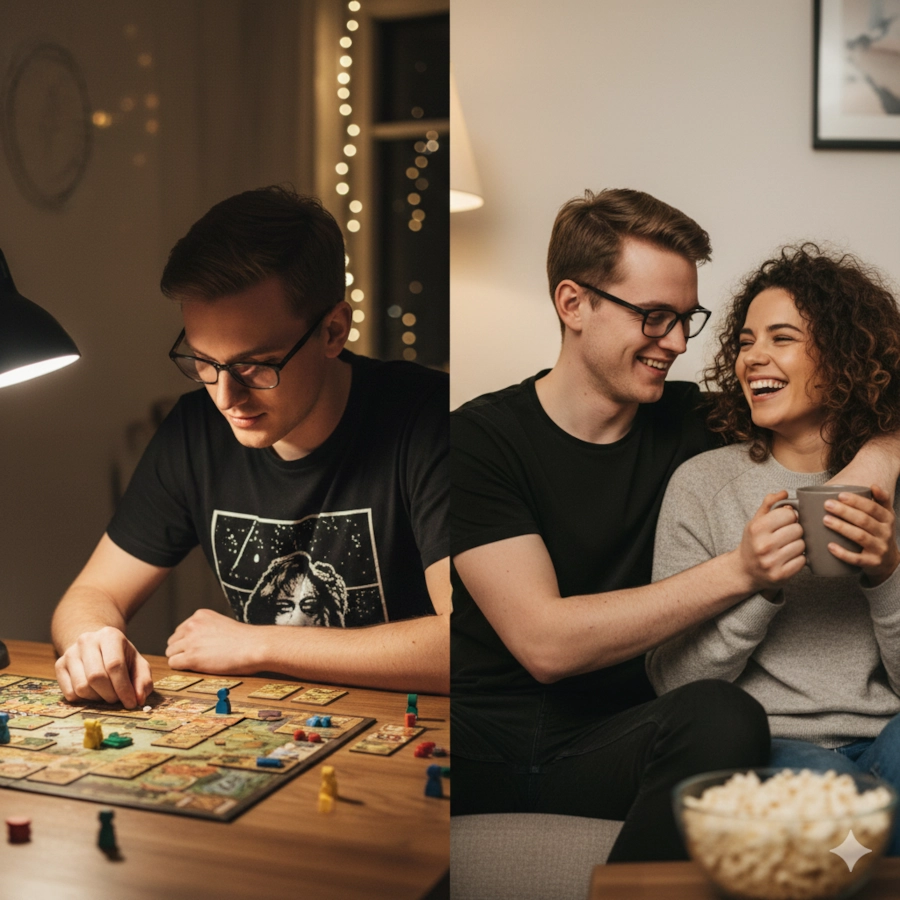
Your partner sighs when you mention game night. Again. You feel guilty planning your weekly session. The tension's building.
Here's the reality: the hobby isn't the problem. The imbalance is.
Board gaming is time-intensive. Campaign games run for months. Weekly meetups are non-negotiable. Convention weekends disappear from the calendar. Add it up and you're looking at 10-20 hours weekly—time that comes from somewhere.
The good news? This is solvable. Balancing gaming and relationships isn't about choosing one over the other. It's about intentional time management, clear communication, and mutual respect. Here's how to keep both your hobby and your relationship healthy.
Why the Conflict Happens
Gaming demands consistent time blocks Unlike hobbies you can pause instantly, games require commitment. You can't walk away from a 3-hour euro at the 90-minute mark. Campaign games need weekly attendance. Your game group depends on you showing up.
Partners feel deprioritized When gaming has a fixed schedule but relationship time is "whenever," your partner gets the message: games are priority one, they're priority two.
Energy matters as much as time You spend four hours at game night, come home mentally exhausted, and have nothing left for conversation. Your partner got your leftover energy, not your best.
Different expectations about "quality time" You think sitting together while you organize your collection counts. They think quality time means phones down, full attention, actual conversation.
The Shared Calendar Solution
Make everything visible: Use Google Calendar or similar. Block out:
- Fixed game nights (weekly D&D, FNM, euro group)
- Convention weekends
- Tournament days
- Solo gaming time
- Date nights
- Quality couple time
- Individual hobby time for your partner
The key rule: equal respect If your Tuesday game night is non-negotiable, their Thursday book club should be too. If you block Saturday for a tournament, they get to block time for their interests without guilt.
Schedule relationship time deliberately Don't leave it to "whenever we're both free." That means gaming gets the good time slots and your partner gets the scraps. Put date night on the calendar with the same weight as game night.
Review weekly Sunday night, look at the week ahead together. Flag conflicts early. Make adjustments before resentment builds.
Quality Over Quantity
When you're with your partner, be present:
- Phone face-down, notifications off
- No BGG browsing during movies
- No mental deck building during conversation
- No "just one second" to check Discord
Thirty focused minutes beats three distracted hours.
When you're gaming, game without guilt: If you've scheduled it and your partner agreed, don't spend game night texting apologies or leaving early to "make it up to them." Be where you are.
Make gaming time count too: If you're spending 15 hours weekly gaming, make sure it's high-quality hobby time you genuinely enjoy, not just filling time because it's there.
Reciprocate support: If your partner supports your 6-hour game day, enthusiastically support their hobbies with equal time and energy. Don't make them beg for what you take for granted.
When and How to Compromise
Life sometimes requires temporary adjustments:
- New job with brutal hours
- Medical issues or family crisis
- Moving to a new city
- New baby or major life change
- Relationship crisis that needs attention
During these periods, gaming might need to scale back temporarily. This isn't abandoning your hobby—it's prioritizing what matters most in the moment.
How to compromise without resentment:
Set clear terms: "I'm taking a month off from regular game night to focus on [situation], then I'm back to normal schedule."
Don't disappear entirely: Maybe you skip weekly sessions but keep monthly board game day. Give yourself some hobby time even during busy periods.
Communicate with your game group: Tell them it's temporary. Good friends will understand and welcome you back.
Don't martyr yourself: "I gave up gaming for you" becomes a weapon. Make it a mutual decision with clear reasoning, not a sacrifice you'll hold over your partner.
Warning Signs of Unhealthy Balance
You might be over-gaming if:
- Your partner has stopped asking about your schedule and just assumes you're unavailable
- You've missed multiple important events for optional game sessions
- Your relationship discussions always turn into negotiations about gaming time
- You feel relieved to escape to game night rather than excited about the hobby
- Friends have commented on your absence from relationship activities
- You're defensive whenever gaming time is mentioned
Your partner might be unreasonable if:
- They resent any gaming time, even scheduled and agreed-upon
- They create "emergencies" every game night to make you cancel
- They refuse to discuss or plan around your hobby schedule
- They mock your hobby or friends constantly
- They expect immediate availability 24/7
- They won't respect clearly communicated boundaries
Both extremes need addressing.
Making It Work Long-Term
Find overlap where possible: Can your partner join game nights occasionally, even as an observer? Can you find one game you both enjoy for date nights? Can you attend conventions together where they have other activities while you play?
Protect each other's passions: You defend their hobby time to your friends. They defend your game nights to their family. United front.
Check in regularly: "Is our current balance working for you?" Ask monthly. Needs change. Stay ahead of resentment.
Celebrate the benefits: Gaming gives you social connection, mental stimulation, and community. Those things make you a better partner. Frame it as investment in yourself, not time away from them.
Know your non-negotiables: If weekly game night is essential to your happiness, own that. Find a partner who can accept it, not someone you're constantly negotiating with.
Finding Compatible Partners from the Start
The best solution to balancing gaming and relationships? Find someone whose expectations align with your hobby commitment from day one.
On Meeple Dates, profiles should show:
- Gaming frequency (casual, weekly, multiple times weekly)
- Time commitment comfort (a few hours monthly vs. 15+ hours weekly)
- Hobby philosophy (gaming is central vs. gaming is one of many interests)
- Schedule flexibility (rigid game nights vs. fluid scheduling)
When you match with someone who games at your level—or who explicitly accepts your gaming schedule, you start with alignment instead of constant negotiation.
Stop defending your hobby to someone who'll never accept it. Find someone who gets it from the start.
Ready to Find Your Gaming Community?
Ready to find a partner who respects your gaming time? Join Meeple Dates and connect with people who understand that balance means respecting both gaming and relationships.
Find Your Match