Building a Regular Game Group That Actually Shows Up
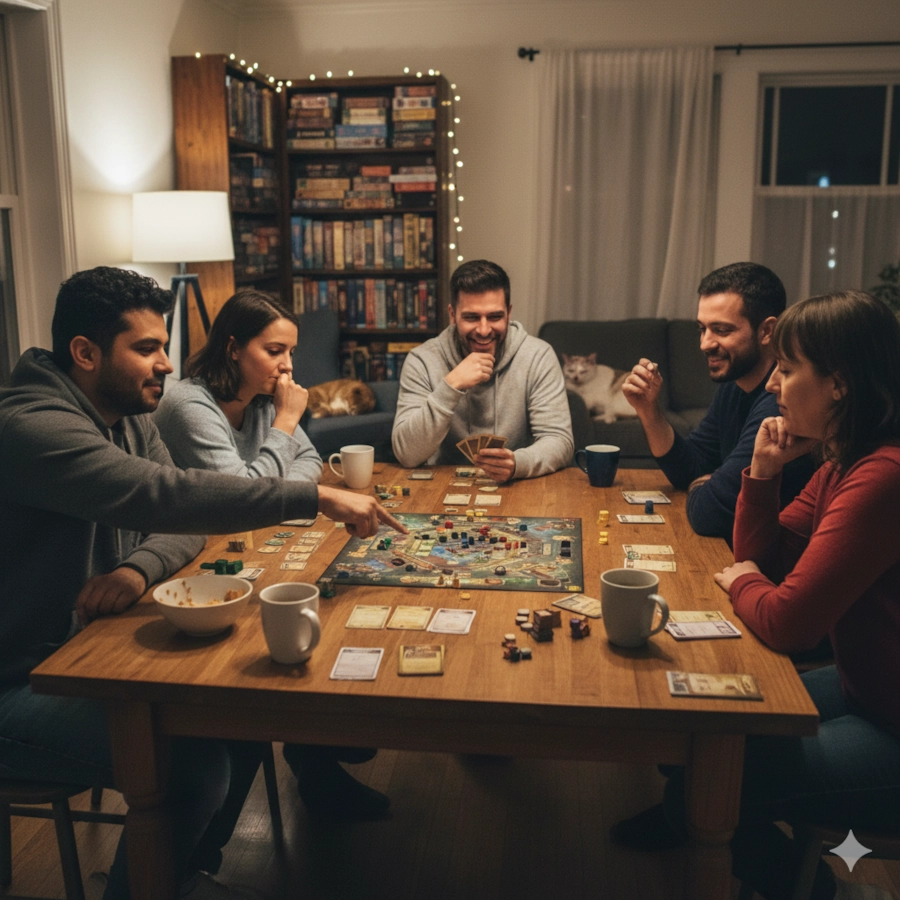
We've all been there. You spend an hour setting up Twilight Imperium, ordered pizza, cleared your schedule… and then the texts start rolling in. "Can't make it tonight, sorry!" Your carefully planned six-player game becomes a disappointing two-player scramble.
Building a regular game group isn't just about finding people who like games. It's about finding people who actually commit and show up. Here's how to build a group that lasts.
The Foundation - Scheduling That Works
- Pick one consistent time slot - Every other Tuesday at 7pm beats "let's figure it out week by week"
- Start with the right size - 4-5 core members gives you flexibility when someone can't make it
- Send reminders - 48-hour check-ins catch conflicts early
- Have backup plans - Know which games work with 3, 4, or 5 players
Pro tip: Use Meeple Dates to find players in your area who list similar availability in their profiles.
Setting Expectations Early
Great groups run on clear communication, not assumptions:
- House rules - Food/drinks policy, smoking, pets, parking
- Financial expectations - Who buys games? Do you chip in for snacks?
- Play style - Competitive? Casual? Teaching-friendly?
- Game selection - Does everyone get a vote? Is there a rotation?
Write this stuff down. Put it in your group chat. Revisit it every few months.
The Commitment Problem
The hard truth: not everyone who says they're interested will actually show up consistently.
Red flags to watch for:
- Cancels more than 30% of the time without notice
- Always arrives late or leaves early
- Never offers to host or bring food
- Only shows up for specific games
Green flags:
- Communicates schedule conflicts early
- Brings snacks or offers to host occasionally
- Suggests new games to try
- Shows up even when you're not playing their favorite
When building your group, look for these green flag behaviors. On Meeple Dates, you can see users' preferred play frequency and hosting preferences right in their profiles—helping you find people whose commitment level matches yours.
Handling the Tough Conversations
When someone's consistently flaky: Be direct but kind. "Hey, we've noticed you've missed the last four sessions. Are you still interested in being part of the regular group?"
When play styles clash: Address it immediately. If someone's rules-lawyering is killing the vibe, have a private conversation. If someone's taking 20 minutes per turn, set gentle time limits.
When you need to rotate people out: Keep a "substitute list" of reliable alternates. When core members can't make it, you've got backups ready to go.
Growing and Maintaining Your Group
Find the right new members:
- Host a trial session before adding permanently
- Look for people who mesh with existing group dynamics
- Consider play style preferences—competitive players and casual players often don't mix well
Keep it fresh:
- Rotate who picks the game
- Try a new title every month
- Attend conventions or local meetups together as a group
Use the right tools: Meeple Dates isn't just for dating—it's for finding reliable gaming partners of all kinds. Filter by play frequency, preferred game weight, and hosting willingness. Find people who take game night as seriously as you do.
Ready to Find Your Gaming Community?
Ready to build a group that actually sticks? Join Meeple Dates and connect with committed players in your area who won't bail on game night.
Find Your Game Group