⚙️ Euro Game Enthusiasts Guide to Dating: Efficiency is Key
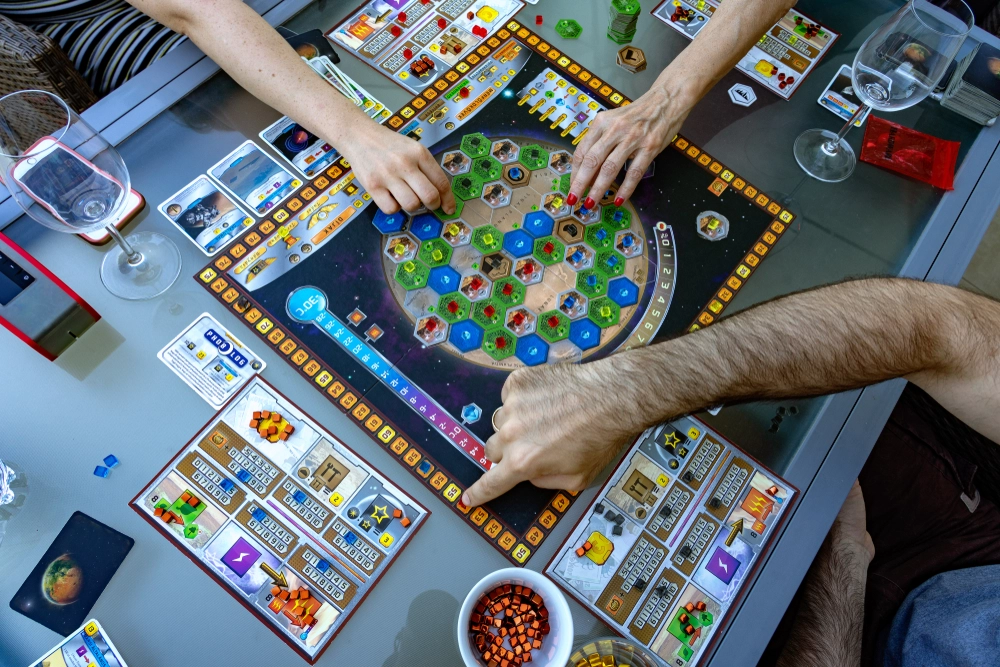
You've been planning your next three turns since before your opponent finished their last one. You see optimization opportunities everywhere. You get genuine satisfaction from a well-executed engine. You believe randomness should be minimized, not celebrated.
Euro game players approach everything strategically—including relationships. We value efficiency, long-term planning, and elegant solutions to complex problems. We'd rather spend three hours on a satisfying worker placement game than waste time on small talk with someone who thinks Monopoly is the peak of strategy gaming.
Finding a partner who appreciates the beauty of a well-designed resource conversion system isn't shallow, it's practical. You need someone who thinks the way you do, who values what you value, who won't mock you for spending twenty minutes on a single turn.
The Euro Gamer Mindset
We prioritize efficiency over flash American-style games are about theme, narrative, and excitement. Euro games are about elegant mechanics, optimization, and strategic depth. We appreciate clean design over chrome. This extends to how we approach relationships—we value substance over superficial excitement.
We think several steps ahead Every move in a euro game is part of a larger strategy. We plan turn sequences, anticipate opponent moves, and optimize resource chains. In relationships, we're natural long-term thinkers who consider consequences and plan for the future.
We're comfortable with complexity Rulebooks don't intimidate us. We enjoy learning intricate systems and finding optimal strategies. We bring this same patience to relationships—we're willing to work through complexity to build something worthwhile.
We value low-luck environments Dice rolls frustrate us. We want skill to determine outcomes, not randomness. In relationships, we prefer clear communication and predictable expectations over emotional chaos.
We're optimization-focused There's always a more efficient way. Whether it's victory point conversion rates or household chores, we're constantly analyzing and improving systems. This can be an asset (life runs smoothly) or a challenge (sometimes good enough is good enough).
What Your Favorite Mechanisms Say About You
Worker placement enthusiasts (Agricola, Viticulture, Caverna) You value resource management and strategic blocking. You're comfortable with competition for limited resources. In relationships: appreciates boundaries, understands scarcity requires planning, comfortable with friendly competition.
Engine builders (Wingspan, Terraforming Mars, Gizmos) You love watching systems compound and synergize. Patient with slow starts if the payoff is worth it. In relationships: invests in long-term growth, appreciates compound benefits of consistent effort, values systems that improve over time.
Tile layers (Carcassonne, Azul, Cascadia) You find satisfaction in spatial puzzles and creating something beautiful through incremental choices. In relationships: builds relationships piece by piece, appreciates how small decisions create larger patterns, values aesthetic harmony.
Action selection players (Puerto Rico, Race for the Galaxy, Res Arcana) You appreciate elegant multi-use mechanics and reading opponent intentions. In relationships: values versatility, watches for social cues, enjoys predicting partner needs.
Economic game lovers (Brass: Birmingham, Food Chain Magnate, The Gallerist) You thrive on market dynamics, investment timing, and long-term financial strategy. In relationships: practical about money, thinks about resource allocation, plans for shared financial future.
Route building fans (Ticket to Ride, Irish Gauge, On the Underground) You enjoy path optimization and spatial problem-solving. In relationships: thinks about connection efficiency, values directness, appreciates finding the best path between two points.
First Date Game Selection Strategy
The first date euro dilemma: Too light and they'll think you're not serious about strategy. Too heavy and you'll overwhelm them. You need the Goldilocks zone—medium weight, elegant, impressive but accessible.
Perfect first date euros:
Splendor (30 min, light-medium) Engine building, elegant, beautiful production. Easy teach, impressive depth. Shows you value efficiency without overwhelming.
Azul (30-45 min, light-medium) Gorgeous, tactile, spatial puzzle with just enough player interaction. Accessible but strategic.
7 Wonders Duel (30 min, medium) Head-to-head civ building with multiple paths to victory. Competitive but not mean. Perfect for two players.
Lost Ruins of Arnak (90 min, medium) Worker placement meets deck building with exploration theme. Modern euro that's accessible but satisfying.
Architects of the West Kingdom (60-80 min, medium) Worker placement with moral choices. Engaging theme, solid strategy, impressive table presence.
Games to save for later dates:
Agricola/Caverna - Too stressful for first dates. "Feed your family or starve" isn't romantic.
Brass: Birmingham - Setup and teach time alone might kill the mood.
Spirit Island - Cooperative but incredibly complex. Save for when you know they're serious.
Food Chain Magnate - Cutthroat economic warfare is maybe third date material.
The Gallerist - 30-minute teach, 3-hour playtime. That's commitment.
Reading Your Date Through Gameplay
Euro games reveal personality traits better than any questionnaire:
How they handle analysis paralysis:
- Quick decisions: impulsive or confident?
- Long contemplation: thorough or indecisive?
- Apologizing for thinking: insecure or considerate?
- Defensive about AP: stubborn or self-aware?
Their competitive style:
- Aggressive blocking: cutthroat or strategic?
- Avoids conflict: cooperative or passive?
- Comments on opponent moves: engaged or backseat gaming?
- Reaction to being blocked: gracious or resentful?
How they approach new information:
- Asks clarifying questions: detail-oriented
- Jumps in without full understanding: confident/reckless
- Needs repeated explanations: struggling or not interested?
- Teaches you something about the rules: engaged and prepared
Their optimization instinct:
- Immediately sees efficient combos: analytical mind
- Plays thematically over optimally: values narrative
- Constantly recalculates: perfectionist tendencies
- Makes "good enough" moves: practical or disengaged?
Their emotional regulation:
- Visible frustration at suboptimal plays: hard on themselves
- Laughs at mistakes: healthy perspective
- Blames luck/rules/opponent: external locus of control
- Quietly strategic: focused or withdrawn?
Compatibility Questions That Matter
Weight preference alignment: "What's your ideal game complexity?" If you love Lacerda games and they max out at Ticket to Ride, you're going to struggle finding overlap.
Play frequency expectations: "How often do you want to play heavy games?" If you want to play 3+ hour euros weekly and they're a monthly player, your relationship will have constant scheduling tension.
Analysis paralysis tolerance: "How do you feel about long turns?" Critical question. If you take 10-minute turns and they want snappy gameplay, frustration is inevitable.
Competition vs. optimization: "Do you play to win or play to solve the puzzle?" Some euro players are cutthroat competitors. Others just want to optimize their own engine. These approaches clash.
Learning curve patience: "How do you feel about first-play disadvantage?" Some people hate losing learning games. Others enjoy the discovery process. This affects what you can play together.
Theme vs. mechanism priority: "Do you need thematic connection or are pure mechanisms enough?" Even within euros, some players need thematic hooks while others are happy with abstract optimization.
The Unique Challenges of Dating Euro Gamers
The analysis paralysis problem:
You're playing a game together. Your turn takes 8 minutes. Then 12. Then 15. You're optimizing, calculating, considering. But to your date, it looks like you've checked out of the shared experience.
AP is real, but in dating contexts, it reads as:
- Not valuing the other person's time
- Caring more about optimal play than shared enjoyment
- Unable to balance competition with connection
If you struggle with AP, acknowledge it upfront and work on it. Set personal turn timers. Practice "good enough" moves. Remember: the optimal move doesn't matter if you've killed the mood.
The "teaching as showing off" trap:
You're excited to share your favorite game. You know it intimately. You explain every strategic consideration, every optimal opening, every advanced tactic... and you've just overwhelmed your date and made them feel inadequate.
Teaching should invite someone in, not demonstrate your superiority. Teach the minimum rules, let them discover strategies, answer questions patiently, and for god's sake, let them make suboptimal moves without correction.
The competitiveness calibration:
Euro games reward optimal play. You've trained yourself to never give advantages away. But in a romantic context, crushing your date at Agricola while explaining why their strategy was doomed from turn three is... not attractive.
Find the balance: play genuinely but prioritize fun over victory. Win graciously. Lose graciously. Make it about the shared experience, not the final score.
The setup/teardown time investment:
Heavy euros have serious table footprints. Setup can take 20-30 minutes. Teardown another 15. That's nearly an hour of non-playing time for a 2-hour game.
On dates, this dead time is relationship time. Don't bury your head in sorting components. Talk. Connect. Make setup collaborative and social.
Long-Term Relationship Considerations
Building a compatible collection:
You both love euros but at different weights. Solution: Find your overlap zone (medium-weight games you both enjoy) and accept you'll each have games you play with other people. Not every game needs to be a couple activity.
Tournament and convention attendance:
Heavy euro tournaments exist but are less common than other gaming scenes. If you're into the competitive euro scene, find a partner who either shares that interest or respects the time commitment.
The shelf space wars:
Euro games have large boxes. Big, beautiful components. Impressive table presence. Two euro gamers living together need serious storage solutions. Discuss this before moving in together.
Financial considerations:
Quality euros aren't cheap. $60-120 per game adds up fast. If you're both buying regularly, you need aligned spending philosophies and budgets.
Social gaming preferences:
Some euro players prefer quiet, focused 2-player sessions. Others love 4-player game nights with friends. Make sure your social gaming preferences align.
Red Flags vs. Green Flags
Red flags:
- Can't handle losing at strategy games
- Gets frustrated with your turn length but takes forever themselves
- Dismisses lighter games as "not real games"
- Constantly offers unsolicited strategic advice during games
- Checks phone during your turns
- Rushes you through rules explanations
- Only wants to play games they're good at
- Takes euro game competitiveness into real arguments ("Well actually, optimal resource allocation would suggest...")
Green flags:
- Excited to learn new euros you introduce
- Handles both winning and losing gracefully
- Respects your thinking time
- Asks thoughtful questions about strategy after games
- Suggests game nights proactively
- Appreciates elegant design and clever mechanisms
- Comfortable playing at various complexity levels
- Can separate game competitiveness from relationship dynamics
Finding Your Strategic Partner
Standard dating apps don't work for euro gamers. You mention you love Agricola and match with someone whose heaviest game is Catan. You try to explain engine building and watch their eyes glaze over.
You need someone who already understands:
- Why good euros have minimal luck
- What worker placement means
- Why a 3-hour game is worth it
- The satisfaction of a well-executed strategy
- The difference between Ameritrash and euro design philosophy
On Meeple Dates, profiles should show:
- Favorite euro mechanisms (worker placement, engine building, etc.)
- Weight preference (light, medium, heavy, very heavy)
- Top euro games (see if your favorites align)
- AP tolerance level (critical compatibility factor)
- Play frequency (casual vs. serious player)
- Competitive level (puzzle solver vs. cutthroat optimizer)
Stop explaining resource conversion to people who don't care. Find someone who gets excited about efficiency engines and elegant design.
Ready to Find Your Gaming Community?
Ready to find someone who appreciates a well-executed worker placement strategy? Join Meeple Dates and connect with euro game enthusiasts who value strategic depth.
Find Your Strategic Partner