😂 Party Game Lovers & Social Connections: The Laughter is the VP
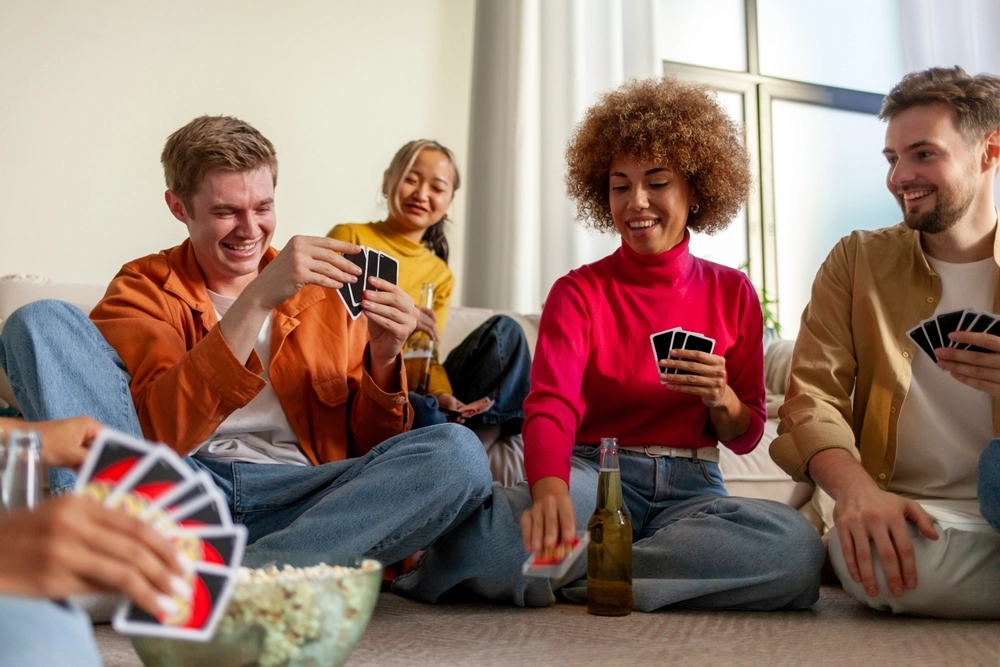
You don't care about optimal resource conversion. You're not interested in 3-hour euro games. You don't want to sit in silence calculating your next move for twelve minutes.
You want to laugh. You want chaos. You want games where someone inevitably shouts "You're the traitor!" or draws something hilariously inappropriate in Telestrations. You want your game nights to be social events, not competitive tournaments.
Party game lovers approach gaming—and dating—differently. We value energy over analysis, connection over competition, and spontaneity over strategy. We're the people who turn game night into a party, not a brain-burning optimization puzzle.
Finding someone who gets that vibe, who thrives in social chaos rather than quiet contemplation, isn't about finding "casual gamers"—it's about finding your people.
The Party Game Mindset
We're social first, gamers second The game is the vehicle for connection, not the point itself. We'd rather play a mediocre game with great people than a brilliant game in awkward silence. This extends to dating—we prioritize chemistry and fun over shared strategic interests.
We value energy and enthusiasm Loud laughs, dramatic reveals, exaggerated acting—we bring energy to the table. We're not quiet contemplators. We're performers, hype people, and chaos agents. We need partners who match or appreciate that energy.
We prefer low barriers to entry Complicated rules kill the vibe. If it takes more than 10 minutes to explain, we're already losing interest. We want games (and relationships) that are accessible, welcoming, and don't require extensive homework.
We're group-oriented Solo gaming? Not really our thing. Small, intense 2-player games? Occasionally. But we thrive in groups of 6-10 where the social dynamics create the entertainment. Our ideal date often involves bringing friends.
We're okay with chaos Randomness doesn't bother us—it creates memorable moments. We don't need perfect information or balanced gameplay. We want surprise, laughter, and stories we'll retell for years.
What Your Favorite Party Games Say About You
Social deduction lovers (The Resistance, Werewolf, Secret Hitler) You enjoy psychological gameplay, reading people, and playful deception. In relationships: perceptive about social cues, comfortable with ambiguity, enjoys verbal sparring, might overthink intentions.
Creative party game fans (Telestrations, Pictionary, Dixit) You value creativity and interpretation over competition. You find joy in the attempt, not just success. In relationships: values expression, comfortable with vulnerability, embraces imperfection, celebrates others' creativity.
Word game enthusiasts (Codenames, Just One, Decrypto) You love clever wordplay and shared wavelengths. Finding the right clue that clicks is your victory. In relationships: values communication, enjoys inside jokes, appreciates when partners "get" you without explanation.
Trivia game players (Wits & Wagers, Wavelength, Hive Mind) You like showing knowledge but prefer social trivia to competitive testing. In relationships: enjoys learning together, values shared cultural knowledge, comfortable being wrong if it's funny.
Physical/dexterity game lovers (Jenga, Crokinole, Flip Ships) You need movement and tactile experiences. Sitting still for strategy isn't your style. In relationships: active, present in the moment, values physical experiences over purely intellectual ones.
Team game devotees (Codenames, The Mind, Wavelength) You're collaborative, not competitive. Winning as a team matters more than individual glory. In relationships: partnership-oriented, values "us against the world" dynamic, celebrates shared victories.
Party Game Dating Strategy
Why party games are perfect for dating:
Low pressure - Nobody expects optimal play. Mistakes are funny, not embarrassing.
Natural icebreakers - Games create conversation topics and shared experiences immediately.
Energy reading - You quickly see if someone matches your vibe or finds your enthusiasm exhausting.
Group integration - Easy to involve friends early, getting external perspectives on compatibility.
Short time commitment - Most party games are 20-45 minutes. If it's not working, you haven't wasted an entire evening.
Perfect first date party games:
Wavelength (30 min, 2-12 players) Guess where your partner's thinking on a spectrum. Shows how well you sync mentally. Can play with just two or bring friends.
Just One (20 min, 3-7 players) Cooperative word guessing. No direct competition, everyone wins or loses together. Great for meeting with mutual friends.
Hive Mind (30 min, 3-12 players) Match answers with the group. Shows shared cultural knowledge and sense of humor. Low stakes, high fun.
Telestrations (30 min, 4-8 players) Drawing telephone. Everyone looks ridiculous equally. Guaranteed laughter. Perfect for double dates or small groups.
Wits & Wagers (25 min, 3-7 players) Trivia where being wrong is fine—you're betting on answers. Social, forgiving, interactive.
Games to maybe avoid on first dates:
Social deduction games - Can get intense. Accusing your date of lying on a first meeting is risky.
Cards Against Humanity - Humor compatibility is critical. A misfired offensive joke can end things fast.
Drinking games - Alcohol + first date + trying to impress = potential disaster.
Anything requiring embarrassing performances - Save charades and improv games for when you're more comfortable.
First Date Formats for Party Gamers
The classic two-player party game date: Meet at a game café, pick 2-player compatible party games (Wavelength, Hive Mind, certain word games). Lower pressure than joining groups, still maintains the party game energy.
The friend group integration: "Hey, my friends and I are playing games Friday. Want to join?" High-pressure for some, perfect for party game lovers who shine in group dynamics. They see you in your natural habitat.
The double date: You + date + another couple = perfect party game numbers. Splits attention so it's less intense than one-on-one, but still clearly a date.
The game café open play: Many game cafés have party game nights where strangers join together. Low commitment, easy exit, natural social environment.
The party game tournament: Some places run Codenames or trivia nights. Compete as partners against other teams. Instant teamwork test.
Reading Compatibility Through Party Games
Energy matching is critical:
- Do they match your enthusiasm or seem overwhelmed?
- Are they comfortable being loud/silly or reserved?
- Do they initiate chaos or wait for others to lead?
- Can they laugh at themselves or do they get self-conscious?
Social awareness matters:
- Do they read the room or dominate?
- Are they inclusive of quieter players?
- Do they celebrate others' funny moments or only their own?
- Can they tell when jokes land or push too far?
Competitive balance:
- Do they care about winning party games? (Potential red flag)
- Are they gracious losers when stakes are meaningless?
- Do they get genuinely upset about losing social deduction games?
- Can they separate game accusations from real feelings?
Group dynamics observation:
- How do they interact with your friends?
- Do they make an effort to include everyone?
- Are they comfortable being the new person?
- Do they monopolize attention or fade into background?
The Unique Challenges
When one person wants depth and the other wants laughs:
You love party games. They love heavy strategy. You can bridge this gap, but it requires compromise:
- Find medium-weight games with social elements (Mysterium, Deception: Murder in Hong Kong)
- Alternate game nights—party games one week, strategy the next
- Accept that some gaming will happen separately with different friend groups
- Focus on the games you both genuinely enjoy, not forcing preferences
The "just play something quick" assumption:
Party game lovers often get dismissed as casual or not "real gamers." Your date might assume you're not serious about the hobby because you prefer Codenames to Brass: Birmingham.
Be clear: preferring accessible, social games doesn't mean lacking passion or knowledge. It's a different gaming priority, not a lesser one.
The volume problem:
Party gamers are loud. Enthusiastic shouting, dramatic reveals, explosive laughter—this is how we play. If your date needs quiet contemplation or gets embarrassed by public attention, you'll clash constantly.
Test this early. If they're visibly uncomfortable with your energy in a game café, they'll be miserable at your usual game nights.
The group dependency:
If you need 6+ players to have fun, dating becomes complicated. You can't just have intimate couple gaming time—you need to coordinate group availability constantly.
Find someone who either shares this preference or is comfortable with gaming being a group social activity rather than couple bonding time.
Long-Term Relationship Considerations
Building a shared social gaming circle:
When both partners are party game lovers, your friend groups merge into one big game night crew. This is wonderful when it works but complicated if the relationship ends. Set some boundaries about shared friends.
Hosting responsibilities:
Party games need space and people. Someone's apartment becomes the default game night location. Discuss hosting duties, cleanup expectations, and food/drink contributions early.
The party game collection:
Unlike heavy strategy games, party games are relatively cheap ($15-40). But you'll end up with dozens. Where do you store them? Who owns what? Less critical than expensive board game collections but still worth discussing.
Balancing party gaming with other activities:
If every social event becomes game night, you might miss other experiences. Make sure you're building a relationship beyond just gaming together—even if gaming is your primary shared interest.
When friends become too involved:
Party gamers often have every date become a group event. Make sure you're also having one-on-one time to actually build the relationship beyond group dynamics.
Red Flags vs. Green Flags
Red flags:
- Takes party games way too seriously
- Gets genuinely upset about losing social deduction games
- Ruins the vibe by being too competitive
- Makes uncomfortable jokes and doesn't read the room
- Embarrassed to be seen playing "silly games"
- Only enjoys party games when drinking
- Dominates game selection without considering others
- Can't handle not being the funniest person in the room
Green flags:
- Laughs at their own mistakes
- Hypes up others' funny moments
- Comfortable looking ridiculous
- Reads social cues well
- Inclusive of new/shy players
- Brings snacks or offers to host
- Suggests game nights proactively
- Genuine enthusiasm for your game recommendations
- Can be equally happy in small or large groups
Finding Your Party Gaming Partner
Mainstream dating apps don't get it. You mention you love board games and match with someone who owns Settlers of Catan and thinks that makes them a gamer. You suggest a game night and they expect quiet, serious strategy.
You need someone who understands:
- Game night is a social event, not a competition
- Laughter matters more than optimal play
- Energy and enthusiasm are assets, not annoyances
- Groups of 6-10 are ideal, not overwhelming
- Quick, accessible games aren't "lesser" games
On Meeple Dates, your profile should show:
- Game style preference (party/social vs. strategy)
- Ideal group size (intimate vs. large groups)
- Energy level (quiet/focused vs. loud/chaotic)
- Top party games (see if your favorites align)
- Hosting comfort (find people who can host or are happy to attend)
- Friend group openness (willing to merge social circles)
Stop explaining why party games are legitimate gaming. Find someone who's already bringing Codenames to every social gathering.
Ready to Find Your Gaming Community?
Ready to find someone who values laughter over victory points? Join Meeple Dates and connect with party game lovers who understand that the best games end in tears of laughter.
Find Your Game Night Crew