🤝 How to Introduce Your Partner to Board Games: The Beginner's Strategy
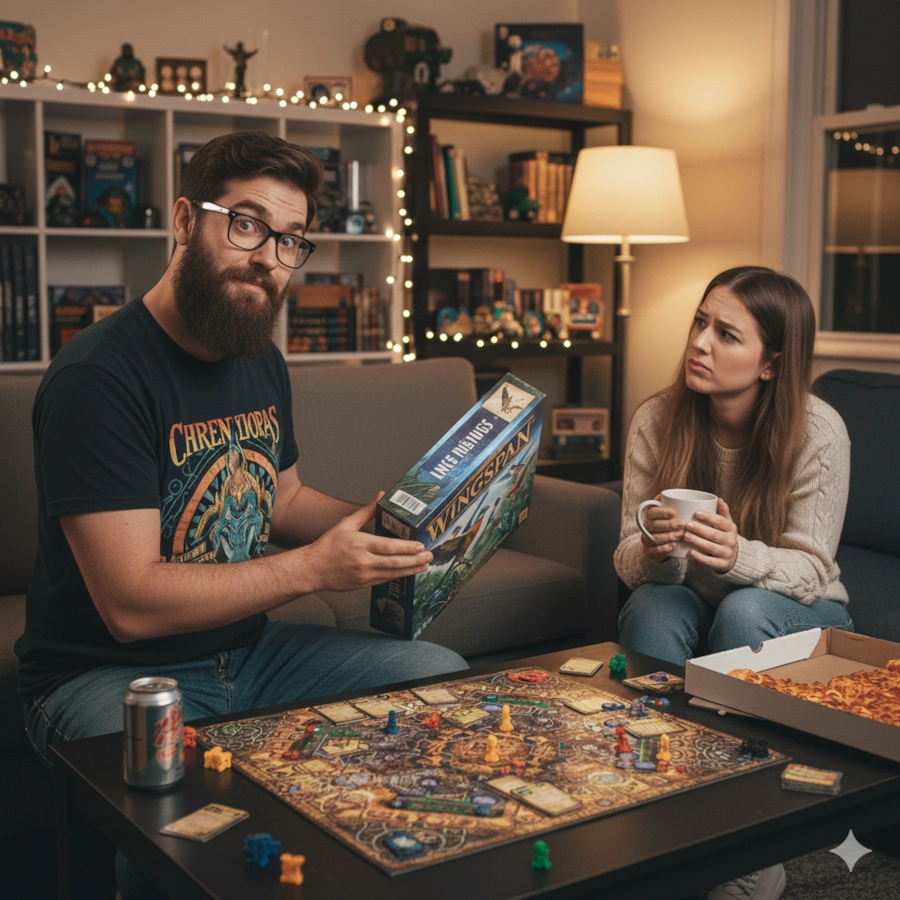
You're excited to share your hobby. You pull out your favorite game, the one with the elegant mechanisms, the deep strategy, the satisfying engine-building. You spend 25 minutes explaining rules. You watch their eyes glaze over. The game takes three hours. They lose badly. They never want to play again.
We've all made this mistake.
Introducing your partner to board games isn't about showing them what you love most. It's about finding what they'll enjoy first. It's about creating positive experiences, not optimal gameplay. It's about building interest gradually, not overwhelming them immediately.
Here's how to actually succeed at converting your partner into a willing gaming companion.
The Golden Rules
Start with fun, not favorites Your favorite game is probably too complex, too long, and too strategic for a first experience. Save it for later. Start with games designed to hook new players.
Prioritize their experience over winning Your goal isn't to win—it's to make them want to play again. Let them win. Help them see good moves. Celebrate their successes. Being crushed by an expert on game one kills interest fast.
Keep it short First games should be 30-45 minutes maximum. If they're having fun, they'll want to play again. If they're not, you haven't wasted their whole evening.
Make it feel like a date, not a lesson Set the mood. Make it cozy. Have snacks and drinks. Put on background music. This is quality time together that happens to involve a game, not a gaming session they're obligated to attend.
Never say "this is easy" To you, Splendor is simple. To someone who's never played a modern board game, it's overwhelming. Don't minimize their learning curve—celebrate their progress.
Choosing the Right First Games
Visual appeal matters Beautiful components draw people in. Games like Wingspan, Azul, or Splendor look impressive on the table and create immediate interest.
Perfect gateway games:
Ticket to Ride (30-60 min) Collect colored cards, claim routes, connect cities. Simple rules, satisfying gameplay, beautiful board. Hard to go wrong.
Splendor (30 min) Collect gems, buy cards, build an engine. Quick turns, clear objectives, tactile chips. Elegant and accessible.
Azul (30-45 min) Draft tiles, build patterns, score points. Gorgeous components, intuitive gameplay, just enough strategy.
Sushi Go! (15-20 min) Draft cards, collect sets, score points. Quick, cute, easy to learn. Great for testing if they enjoy card games.
Kingdomino (15-20 min) Draft tiles, build your kingdom, score based on terrain. Fast, beautiful, immediately satisfying.
Forbidden Island (30 min) Cooperative game where you work together to escape a sinking island. No competition pressure, team success/failure together.
Games to avoid for first-timers:
- Anything over 90 minutes
- Games with complex rules or teach times over 15 minutes
- Heavy strategy games with steep learning curves
- Direct conflict or "take that" mechanics
- Games where experienced players crush beginners
- Your personal favorite 3+ hour epic
The Teaching Approach
Don't dump the whole rulebook upfront: Teach the minimum viable rules to start playing. Introduce complexity as it becomes relevant during gameplay. "On your turn, you'll do one of these three things..." is better than explaining every edge case before turn one.
Use an example turn: Play a demo round together. Show them what a turn looks like. Let them see the flow before worrying about optimal strategy.
Emphasize theme over mechanisms: "You're collecting train routes across America" is more engaging than "You're drafting colored cards to claim route spaces."
Answer questions patiently: They'll ask the same thing multiple times. That's normal. Don't get frustrated. Don't make them feel stupid for not remembering.
Let them make mistakes: Don't prevent bad moves unless they're missing a fundamental rule. Let them learn through playing, not through you playing for them.
Celebrate their clever moves: When they make a good play, acknowledge it enthusiastically. Positive reinforcement builds confidence and interest.
Don't optimize their strategy: Unsolicited advice kills fun. If they ask for help, give general guidance—not "the optimal move is obviously X."
Creating the Right Environment
Pick the right timing: Not when they're tired, stressed, or distracted. Choose a relaxed evening when you both have energy and time.
Set up beforehand: Don't make them sit there while you sort components and read rules. Have everything ready when they arrive. Start playing within 5 minutes.
Make it comfortable: Good lighting, comfortable seating, table at the right height. Physical comfort affects enjoyment more than you'd think.
Have good snacks: Food creates positive associations. Their favorite snacks + new game = brain connects the two as pleasant experiences.
Minimize distractions: Phones away (both of you), TV off, interruptions minimized. Give them your full attention and make them feel like this time matters.
Keep it light: Background music, casual conversation between turns, laughter when things go wrong. This isn't a tournament—it's supposed to be fun.
Reading Their Response
Green flags (they're enjoying it):
- Asking questions about strategy
- Laughing at game moments
- Saying "one more game?"
- Commenting on components or artwork
- Planning their next move during your turn
- Mentioning they'd play with friends
Yellow flags (they're tolerating it):
- Checking phone frequently
- Long turns with analysis paralysis
- Asking how much longer
- Making moves quickly without thinking
- Polite but not enthusiastic
- Saying "sure" when you suggest playing again
Red flags (they're not enjoying it):
- Visibly frustrated or stressed
- Asking to stop mid-game
- Becoming withdrawn or quiet
- Defensive about mistakes
- Declining immediate rematch
- Never bringing it up again
Adjust based on their response. Don't push if they're not into it.
The Progression Path
After successful first games, gradually increase complexity:
Level 1 (Weeks 1-2): Gateway games - Ticket to Ride, Splendor, Azul Level 2 (Month 1): Light strategy - 7 Wonders Duel, Carcassonne, Jaipur Level 3 (Months 2-3): Medium complexity - Wingspan, Cascadia, Patchwork Level 4 (Months 3-6): Deeper games - Everdell, Viticulture, Lost Ruins of Arnak Level 5 (6+ months): Your favorites - Now they're ready for what you really love
Don't rush this progression. Some people stay at Level 2 forever and that's fine. The goal is shared enjoyment, not converting them to your exact preferences.
When They're Not Into It
Accept their preference gracefully: Not everyone will love board games, even with perfect introduction. If they've tried several games and consistently don't enjoy it, respect that.
Don't take it personally: Their disinterest in board games isn't rejection of you or your passions. People have different interests. That's okay.
Find alternative shared activities: What do they enjoy? Meet them halfway. If they try your games, you try their hobbies. Balance matters.
Keep gaming with friends: You don't need your partner to be your primary gaming companion. Have your game nights, they have their activities, you both have couple time doing things you both enjoy.
Consider dealbreaker status: Is having a partner who games with you essential to your happiness? If yes, this might be a compatibility issue. If no, accept the boundary and enjoy gaming with your established group.
Finding Gaming-Compatible Partners
The easiest way to introduce your partner to board games? Start with someone who's already interested.
On Meeple Dates, your profile should show:
- Gaming experience level (non-gamer, curious beginner, casual, dedicated, hardcore)
- Openness to learning (explicitly states interest in trying new games)
- Game preferences (so you can plan appropriate introductions)
- Gaming frequency comfort (how much time they want to spend on the hobby)
When you match with someone who's genuinely curious about board games or already plays casually, you skip the conversion challenge entirely. You're starting from mutual interest instead of from scratch.
Ready to Find Your Gaming Community?
Ready to find someone who's excited to explore board games with you? Join Meeple Dates and connect with people who are eager to learn or already love the hobby.
Find Your Gaming Partner